
Our Lasers, Fiber
The metal specialist. A fiber laser puts permanent, high-contrast marks into bare metal, stainless steel, aluminum, brass, and titanium, with the speed and repeatability industrial marking demands. Serving Wilmington, DE and the Mid-Atlantic.
A fiber laser generates its beam through an optical fiber doped with rare-earth elements, producing a tightly focused, high-intensity spot at roughly a 1.06-micron wavelength. Bare metals absorb that wavelength readily, so the laser can etch, deep-engrave, anneal, or polish metal that a CO2 laser simply reflects off of.
At Victory Laser Engraving, the fiber laser is how we deliver permanent metal engraving, metal business cards, dog tags, branded tools, firearm and gear marking, and true industrial part marking with serial numbers and traceability codes. It is fast, precise, and built for production.
When the part is metal and the mark has to last, fiber is the answer.
Crisp etched or annealed marks on knives, tools, tumblers, and medical-grade hardware, corrosion-resistant and permanent.
Bright white marks on bare aluminum and crisp contrast on anodized parts, nameplates, panels, and brackets.
Fine detail on challenge coins, jewelry, gold, and silver, deep engraving or delicate surface marking.
Serial numbers, lot codes, QR and Data Matrix codes for traceability and compliance, repeatable across full production runs.
Premium engraved metal cards, dog tags, and luggage tags with luxury-grade contrast and edge detail.
Durable logo and identification marking on tools, equipment, and firearm components (where legally permitted).
A few recent metal pieces marked on our fiber system.
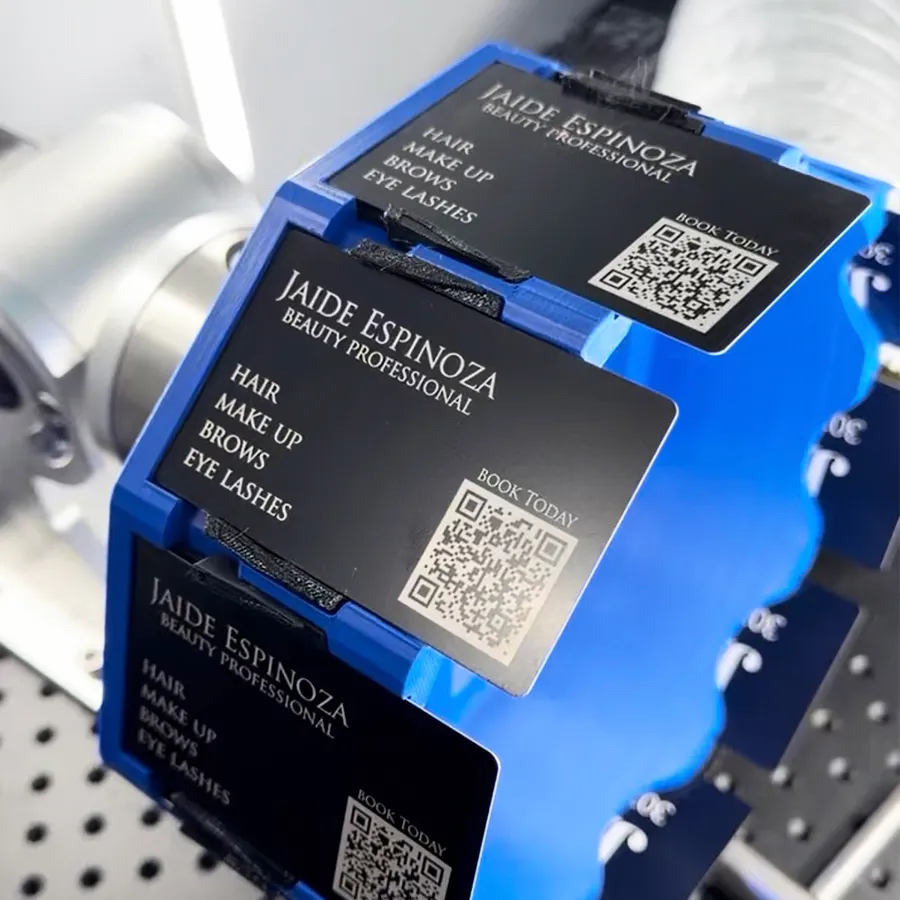
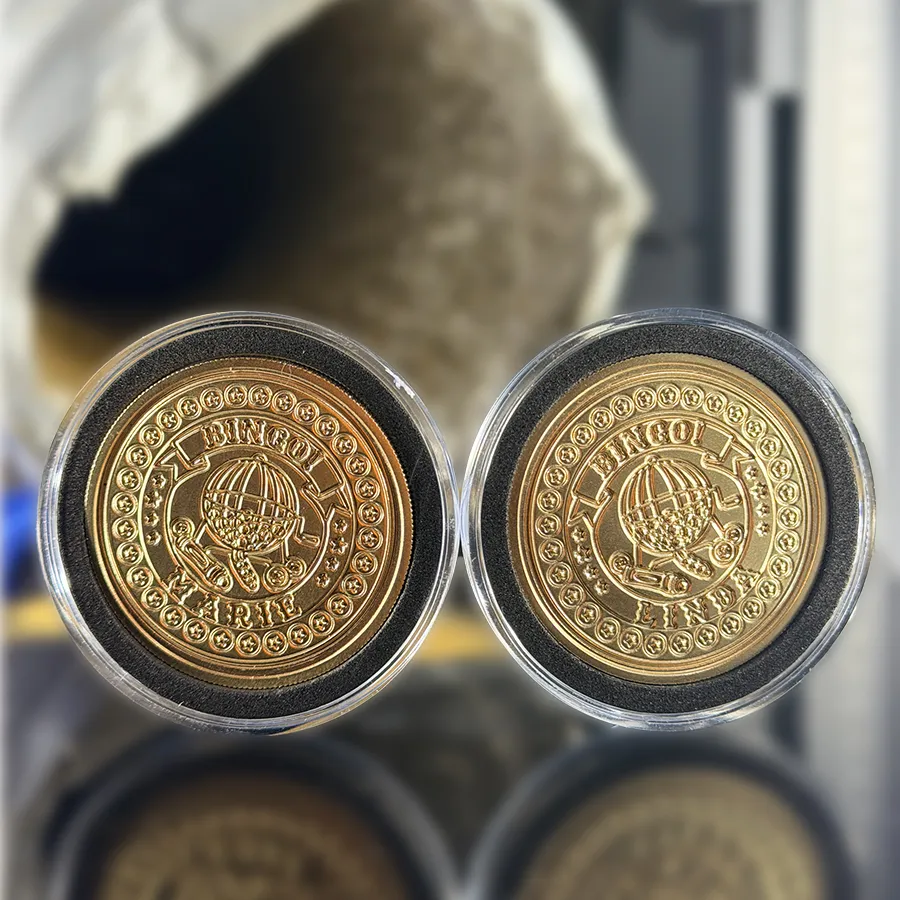
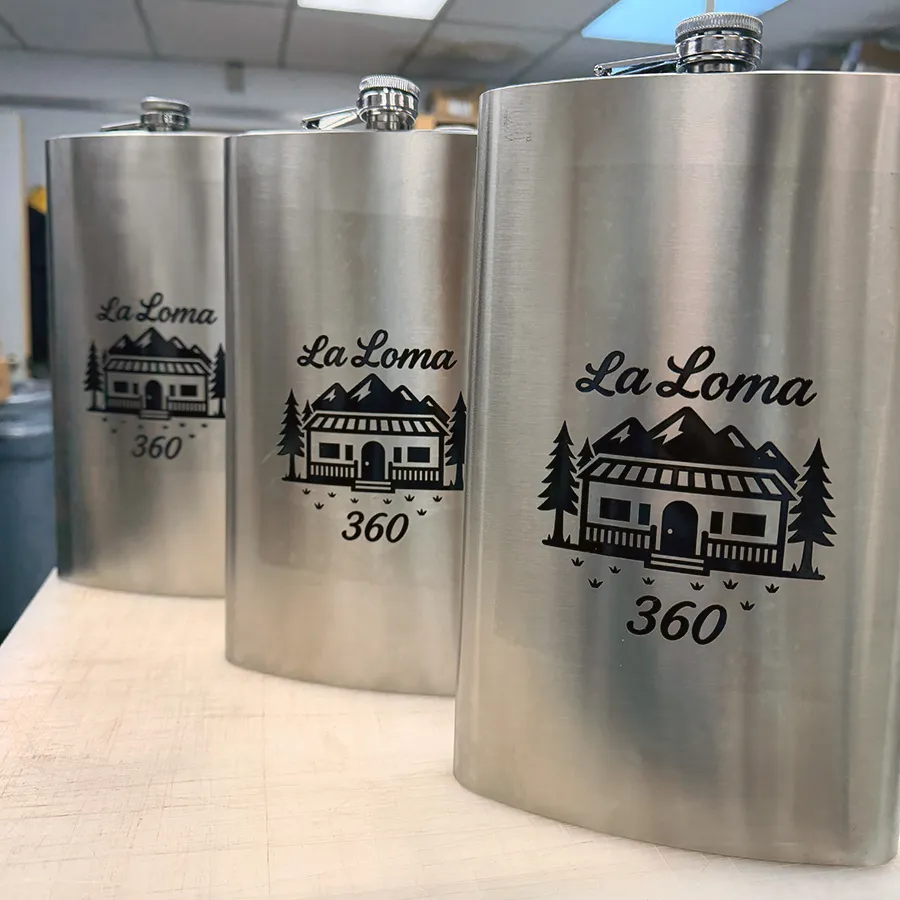
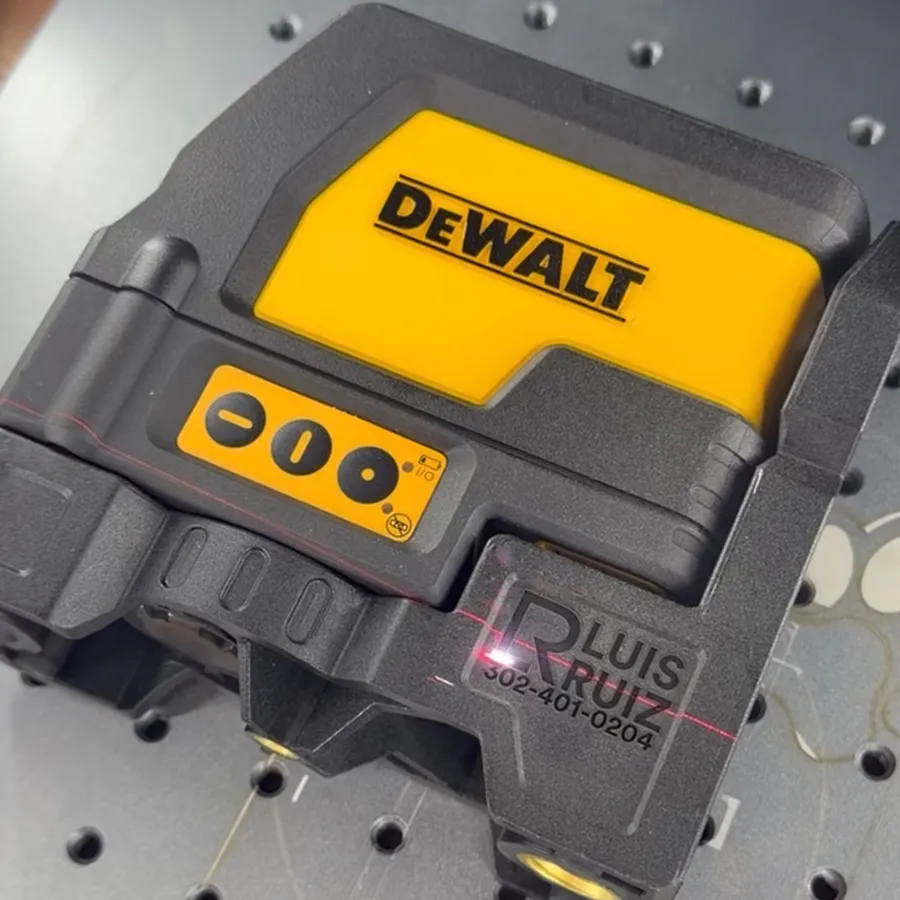
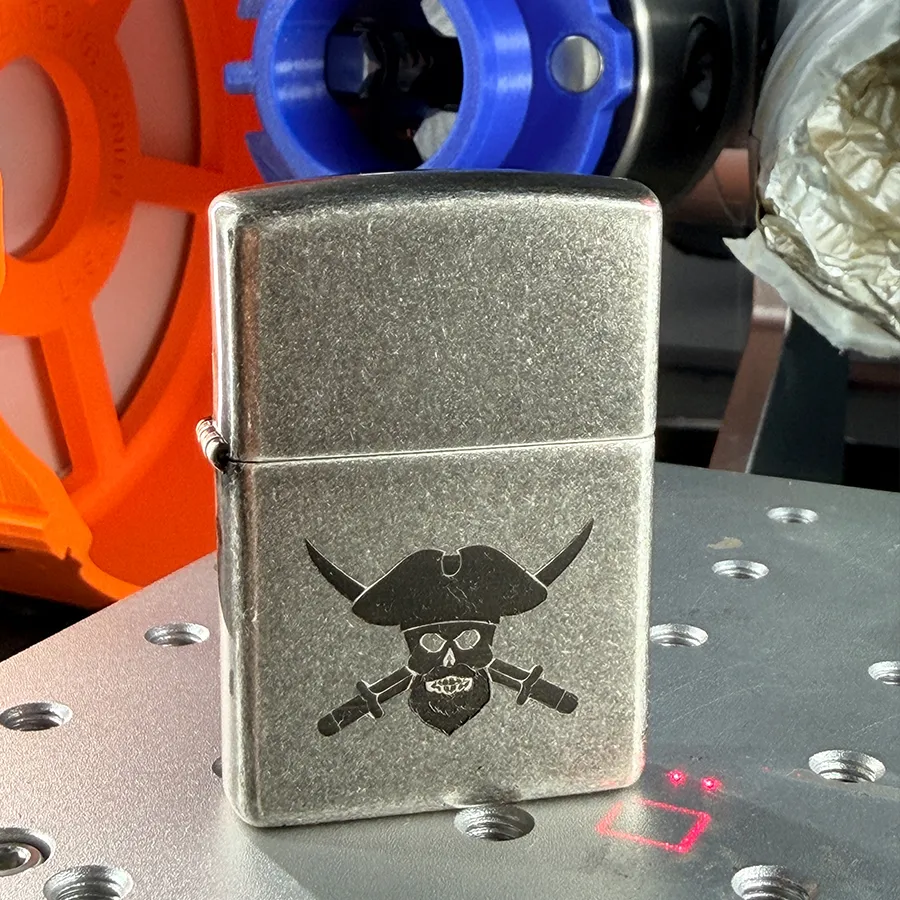
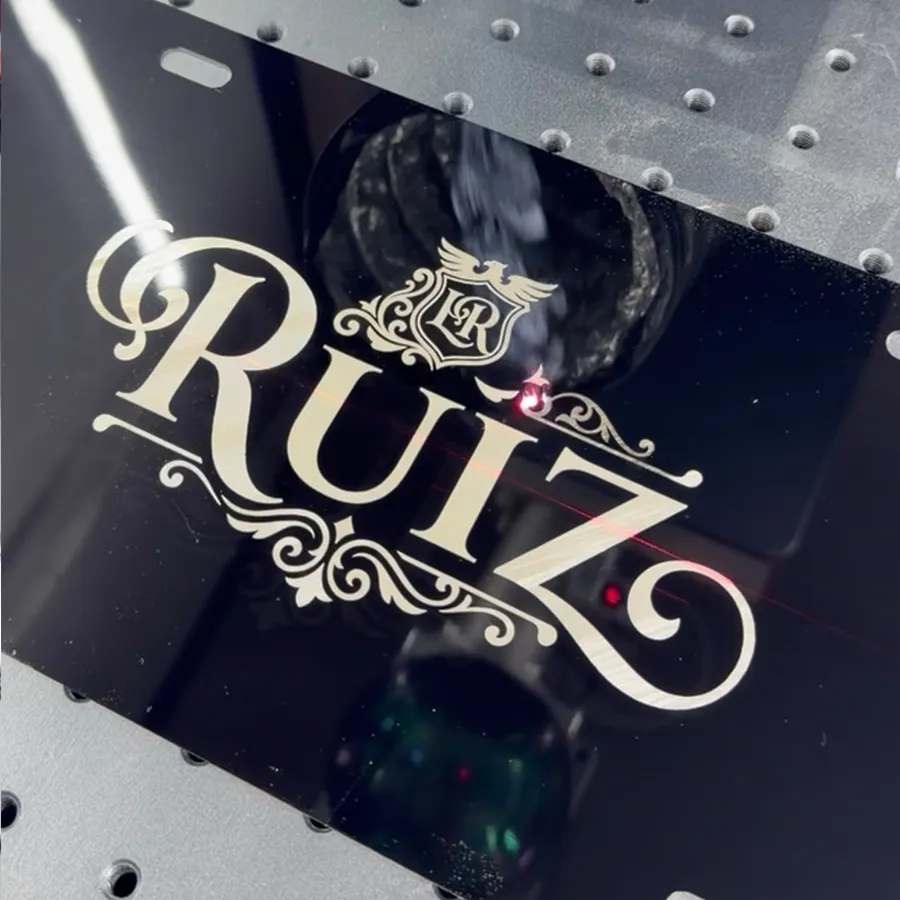
Fiber is for bare metal and industrial marking. For other materials, we reach for a different tool.
Common questions about fiber engraving and metal marking.
A fiber laser marks metals: stainless steel, aluminum, anodized aluminum, brass, copper, titanium, gold, silver, carbide, and many engineering plastics. It gives permanent, high-contrast marks on bare metal, which is exactly where a CO2 laser cannot go. Reflective metals like copper and brass need more care in setup but finish beautifully.
Annealing is a fiber-laser technique that heats stainless steel or titanium just enough to oxidize it below the surface, creating a smooth black or colored mark without removing any material. Because nothing is cut away, the surface stays sealed and corrosion-resistant. That makes it the right choice for medical instruments, food-contact parts and tools that get washed down.
Yes. Fiber is the standard for serial numbers, barcodes, QR and Data Matrix codes, logos and compliance marking on metal parts. Each mark is identical and permanent, and the machine works through a list, so runs of one to several thousand are all routine. Send us the part and the data file and we will mark a sample first.
The wavelength, and it decides everything else. A fiber laser runs at about 1.06 microns, which bare metals absorb readily. A CO2 laser runs at 10.6 microns, which metals reflect but wood, acrylic and glass absorb. So fiber for metal, CO2 for non-metals and for cutting. For delicate, ultra-fine work we use a UV laser instead of either.
From one custom piece to full production runs, get a free quote in Wilmington, DE.
See our tool identification example and industrial engraving services. Send the material, finish, marking area, exact data and intended use so we can review suitability and any sample requirements.